
The short answer is yes - rabbits can eat strawberries. But before you begin to offer them in your rabbit’s diet, it's worth knowing a few things about how much to give, which parts are safe, and what the rest of their diet should actually look like day to day.
This all inclusive guide from us here at HayDay can hopefully help you decide on whether you want to indulge your rabbit with these sweet treats or not, and if so how to do it safely.
So, Are Strawberries Safe for Rabbits?
Yes - strawberries are non-toxic and perfectly safe for rabbits to eat. They contain vitamin C, folate and antioxidants, and most rabbits absolutely love them.
The issue with offering strawberries can be the sugar content. Rabbits have quite sensitive and delicate digestive systems, and too much natural sugar can cause loose droppings, weight gain, and in more serious cases, a condition called GI stasis - where the gut essentially stops moving. Without sufficient quantities of hay (for example, timothy hay or meadow hay) in the diet to keep things balanced, even a small amount of fruit can tip things the wrong way.
So the rule is simple: strawberries can be a good addition to the diet in small quantities. One small strawberry, or a couple of small pieces, once or twice a week is plenty.
For larger breeds you can stretch to two or three, but that's really the upper limit. Always wash the fruit first, and if your rabbit has never had them before, start with a tiny piece and watch how they get on to avoid any digestive upset.
Can Rabbits Eat Strawberry Leaves, Tops, and Seeds?
This is where a lot of rabbit owners are pleasantly surprised.
Strawberry leaves are completely safe and honestly a brilliant snack for rabbits! They're low in sugar, fibrous and most bunnies enjoy them just as much as the fruit itself. If you grow strawberries at home, don't bin the leaves - try passing them straight to your rabbit. (just make sure they haven’t been treated with pesticides before offering them to your rabbit.)
The green tops and hulls (the bit you'd normally pull off before eating) are also totally fine. They're actually better for your rabbit than the lower sugar content. These can be offered more regularly than the berry itself as part of a balance mixed of leafy greens.
The seeds on the outside of the strawberry are so small they're essentially a non-issue. They pass through without any trouble at all.
What About Dried or Frozen Strawberries?
Fresh strawberries are always best. Here's why the other versions aren't ideal:
Dried strawberries should be avoided altogether. The drying process strips out the water and leaves behind a super-concentrated hit of sugar which is far too much for a rabbit's gut to handle, even in small amounts. If you see these marketed as rabbit treats, we would recommend that you put them back on the shelf!
Frozen strawberries are fine in principle, but let them thaw completely before offering them. Cold food straight from the freezer can cause digestive upset.
Unripe strawberries (the white or pale green ones) are best to avoid completely. They're more acidic than ripe fruit and can irritate your rabbit's stomach.
It All Starts With Rabbit Hay
Before we get back into strawberries, let's talk about the main components of a healthy rabbit diet and what should already be sitting in your rabbit's enclosure right now - best quality rabbit hay!
Here at HayDay, we grow our hay from our farm in Yorkshire, and we'll be honest with you: hay is the single most important thing you can give your rabbit. Around 80 - 95% of their diet should be made up of it - every single day, without exception.
Types of rabbit hay to feed alongside strawberries
Not all hay is the same though, and the type you choose matters:
-
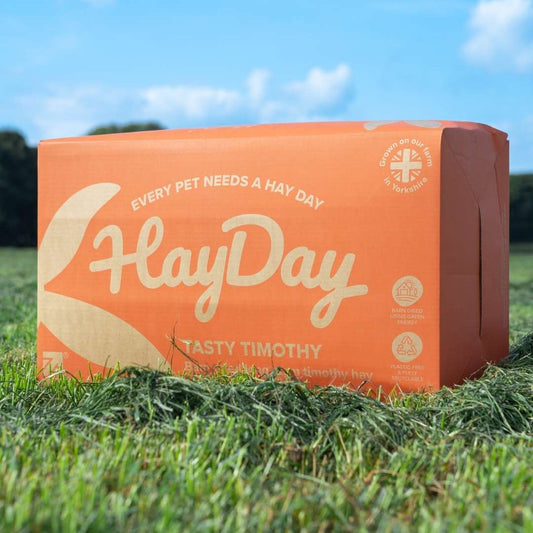
Timothy hay is what we would call the ‘gold standard’ for adult rabbits. It's high fibre and the coarser texture is brilliant for natural dental wear. Most vets will recommend it as the everyday feeding hay staple!
-
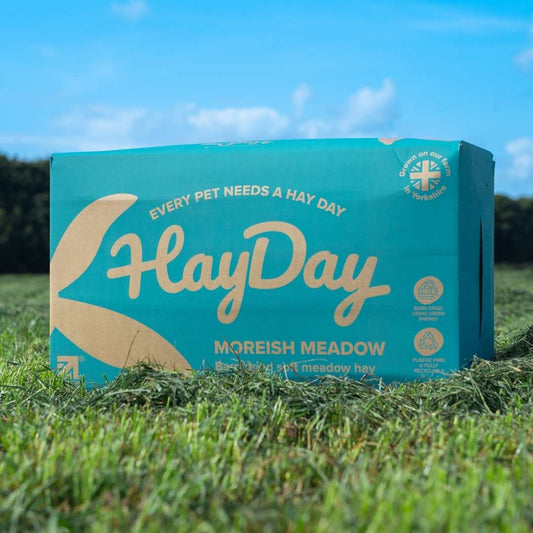
Meadow hay is softer and more varied in texture. It's great for encouraging reluctant eaters as it’s extremely palatable and pairs as a great bedding too. This is also a perfect everyday feeding hay, alongside timothy to provide diversity and enrichment.
-
Oat hay is high fibre, crunchy and nutritious, which makes it a great option to feed alongside your rabbits everyday hay. Feed oat hay for added enrichment or to top up nutrition if required.
A rabbit with a healthy, balanced diet with unlimited amounts of high quality hay will be happy and healthy with the digestive and dental health they need as a foundation. Everything else, such as hard feed (pellets), fresh leafy greens and vegetables and fresh water, builds on top of that.
Better Everyday Alternatives to Fruit
Strawberries are great as a treat, but if you want to give your rabbit something they can enjoy more regularly, leafy greens are a much better choice:
Romaine lettuce is one of the safest and most reliably well-tolerated greens you can offer. High in water and gentle on the stomach, a few leaves a day is perfectly fine as part of a varied mix of leafy greens. Just avoid iceberg lettuce as it's mostly water, low in nutrients and can contribute to loose, inconsistent poops.
Kale is packed with vitamin K, vitamin C and calcium. It's nutritious but quite rich, so two or three times a week is better than daily - particularly for rabbits that are prone to bladder issues (as its calcium content is higher than some other greens).
Cabbage also works well in small amounts too. Savoy and green cabbage are also good choices!
Spring greens are a brilliant all-rounder — lower in oxalates than kale, easy to find, and generally very well tolerated as a daily staple green.
Watercress adds variety and most rabbits enjoy the slightly peppery flavour.
Fresh herbs like basil, parsley, coriander, and dill are great for mixing things up. Far lower in sugar than any fruit, and brilliant for encouraging picky eaters to graze. Some herbs, such as parsley, are higher in calcium, so are best included as part of a varied mix rather than fed in large amounts daily.
As with introducing any new foods to your rabbit's diet, introduce it gradually (over a period of 7-14 days) as it can cause gas or excess bloating when transitioning.
Other Fruits Rabbits Can Eat
If your rabbit enjoys strawberries, they'll likely love these too! All safe in small amounts as occasional treats:
-
Blueberries
-
Raspberries
-
Apple
-
Pear
-
Watermelon
-
Banana
-
Mango
Fruits like avocado, grapes and citrus are best avoided, as they can be toxic, too acidic, or high in sugar for rabbits.
Foods That Are Actually Dangerous for Rabbits
Keep this list handy as a lot of these are everyday kitchen items that seem harmless, can be harmful or unsuitable for rabbits:
-
Onions, garlic, and leeks are toxic
-
Rhubarb — toxic even in small amounts
-
Avocado — highly toxic, avoid completely
-
Chocolate — toxic, as it is with most pets
-
Iceberg lettuce — contains lactucarium which can be harmful in larger quantities (but the main reason for avoiding is due to the fact that it is very low in nutrients and can contribute to loose stools if fed in larger amounts)
-
Potatoes and starchy veg — too high in starch and hard on the gut (raw potatoes in particular contain solanine which is a toxic compound)
-
Bread, cereal, crackers — zero nutritional value and genuinely damaging for digestive health
-
Nuts and seeds — far too high in fat
-
Apple seeds and cherry pits contain compounds that break down into cyanide
Strawberries are a perfectly safe, genuinely enjoyed little treat - and now you know the leaves and tops are just as good, so you're getting more out of every punnet too. Just keep portions sensible, keep timothy or meadow hay at the centre of the diet, and your rabbit will be a very happy bunny.
Why HayDay Produces the Best Premium Rabbit Hay - Delivered Across the UK
Strawberries are a lovely little treat, but the hay rack is where your rabbit's health is at the forefront. At HayDay, we grow our hay from our own farm in Yorkshire and deliver our full premium range to rabbit owners all across the UK - delivered straight to your door, dust-extracted and packed with the long-stem fibre your rabbit genuinely needs.
Whether you're after timothy or meadow hay as a daily foundation, ryegrass and oat hay for added variety or alfalfa hay for a young or nursing rabbits - we've got it all!
And if you never want to worry about running out again, our hay subscription service takes care of everything. Choose your variety, pick your delivery schedule - every 2, 4, 8 or 12 weeks (and if there’s not a suitable option, get in touch!) - and we keep your rabbit’s hay stocked automatically. Subscribers get 15% off our hay rather than one-off orders and you can easily amend, delay or cancel your subscription at any time.
Fresh, green hay delivered to your door, with a happier and healthier rabbit!
Frequently Asked Questions
What is GI Stasis and what are the warning signs?
Gastrointestinal (GI) stasis is a serious, potentially fatal condition where the movement of the rabbit's digestive tract slows down or stops completely. Signs include a sudden refusal to eat or drink, a lack of or very small faecal pellets, lethargy, and a hunched posture due to pain. If you suspect GI stasis, you must seek veterinary care immediately.
How can I encourage my rabbit to eat more hay?
The best way to encourage hay consumption is to offer variety, mixing or rotating types like Timothy and Meadow hay. Keep the hay fresh by changing it daily, placing it in multiple locations (especially near the litter tray where they like to graze), and ensuring it is always dust-extracted and high-quality.
What is the correct age to introduce fresh vegetables and fruit to my rabbit?
Fresh vegetables should be introduced slowly after a kit is 12 weeks old, starting with small, single items. Fruit and high-sugar treats should be avoided until the rabbit is at least 7 months old and fully transitioned to an adult diet based on Timothy or Meadow hay.