Yes - rabbits can eat grapes, but only as a rare treat and in very small amounts. Grapes are high in sugar and water which means overfeeding them can lead to digestive problems, through reduced hay consumption causing unwanted weight gain and dental issues.
Here at HayDay, we know that getting your rabbit's diet right can feel overwhelming sometimes. Hay is at the heart of everything we do, but we also want to help you make good choices when it comes to treats. This guide covers everything you need to know about feeding grapes to your rabbit - how much, how often and what to watch out for.
Also, ensure tosSupport your rabbits diet with our superb range of rabbit hay here
Are grapes actually safe for rabbits?
Yes, grapes are safe for rabbits but with some important points you must follow.
While exploring safe treat options, never forget that fresh, high-quality hay remains the most critical part of your rabbit's daily intake, supporting their digestion even when you introduce something new.
Unlike dogs, rabbits do not have a toxic reaction to grapes. That said, the high sugar content means that feeding too many can still cause real harm. Think of grapes the way you might think of sweets for a child - fine as an occasional treat, but not something you'd want them eating every day.
A common mistake rabbit owners make is assuming that because something is natural or fruit based, it must be fine in large amounts. With grapes, a little really does go a long way.
Can rabbits eat all types of grapes?
This is a question worth answering properly, because there are more grape varieties out there than most people realise.
Green grapes
Green grapes are one of the most common varieties and are safe for rabbits in small amounts. Like all grape varieties, they are naturally high in sugar, so they should only be offered as an occasional treat.
Red grapes
Red grapes are also safe for rabbits in small amounts. Like all grape varieties, they are naturally high in sugar, so the same small-portion rules apply.
Black grapes
Black grapes are also safe for rabbits in moderation. Although they often taste richer and sweeter, they should be treated the same as other grape varieties and only offered occasionally.
Purple grapes
Purple grapes can also be offered occasionally as a treat. As with all grape varieties, portion size is more important than the colour of the fruit.
Seedless grapes
Seedless grapes are often the easiest option. Although grape seeds are not known to be toxic to rabbits, removing seeds avoids the small risk that they could be difficult for some rabbits to chew.
Cotton candy grapes
Cotton Candy grapes have been bred to taste much sweeter than traditional table grapes. Because they are particularly sweet, it's sensible to offer them only very occasionally and in very small amounts.
The bottom line across all grape types is the same: they are safe in small amounts and potentially harmful in large ones. Regardless of the variety, grapes should always be treated as an occasional treat and fed in small portions.
Raisins, regardless of which grape they came from, are a definite no. The drying process concentrates the sugar dramatically, making them far more problematic for a rabbit's digestive system than fresh grapes.
How many grapes can a rabbit eat?
This depends on your rabbit's age and size, but as a general rule, less is better.
No matter the portion size of the treat, ensuring your rabbit has unlimited access to premium hay is vital to balance the natural sugars found in fruits like grapes.
For baby rabbits under six months old, grapes should be avoided entirely. Their digestive systems are still developing and the high sugar content can cause serious upset during this stage.
For young rabbits between six and twelve months, stick to no more than one or two small pieces on an occasional basis. For adult rabbits aged twelve months and older, two to three small pieces once or twice a week is generally considered a sensible amount. If you have a dwarf or smaller breed, scale this back further and cut each piece smaller too.
It helps to think of grapes as a weekly treat rather than something you reach for daily. Your rabbit will enjoy the occasional burst of sweetness far more than you might expect.
How to prepare grapes for your rabbit
Before you hand over a grape, a little preparation goes a long way.
Start by washing grapes thoroughly under cool running water. This removes any pesticide residue, wax or surface dirt that could upset your rabbit's stomach. Whether organic or conventionally grown, always wash grapes thoroughly before feeding.
Cut each grape into small pieces - roughly half-inch chunks - to make them easier to eat. Seedless varieties are the safest option across all colours. Never feed cooked, candied or processed grapes of any kind. Fresh, raw and washed is the only way to go.
Are Grapes Good For Rabbits?
Grapes are not a nutritional powerhouse for rabbits, but they do contain a few useful things.
They provide small amounts of vitamins B, C, and K, along with potassium and manganese. Much of the fibre and many of the antioxidant compounds are found in the skin.. Darker grape varieties such as black, purple and Concord grapes tend to contain more antioxidants than lighter varieties, thanks to the natural pigments in their skin.
That said, grapes should never be thought of as a healthy food for rabbits. The sugar content is too high for them to be anything other than an occasional snack. Leafy greens like parsley, romaine lettuce and kale will do far more for your rabbit's overall health on a daily basis.
What are the risks of feeding too many grapes?
The biggest concern with grapes is their sugar content. Feeding too many, too often, can lead to soft stools, diarrhoea, bloating and over time, weight gain and an unbalanced diet.Rabbits have very sensitive digestive systems that rely on constant fibre intake to stay healthy. Introducing too much sugar disrupts the delicate balance of bacteria in their gut, which can cause things to go wrong fairly quickly. If your rabbit seems uncomfortable after eating grapes (i.e. bloated, lethargic, or producing unusual droppings) stop feeding them and keep a close eye out. If symptoms persist, always speak to a trusted exotic vet.
Cutting grapes into smaller pieces makes them easier for rabbits to eat, particularly for smaller breeds.
How do you introduce grapes for the first time?
Always introduce new foods slowly with rabbits. Their digestive systems do not respond well to sudden change.
As you introduce these new flavours, maintain a consistent supply of coarse, fibre-rich hay to keep their gut moving and help process the change in their diet.
Start with a very small piece - a quarter of a grape is plenty for a first try. Offer it once and then wait a few days before giving any more. Watch your rabbit's droppings and general behaviour during that time. Healthy droppings should be firm, golden and rounded. If you notice soft or watery poops, hold off on the grapes for a while before trying again with an even smaller amount.
If all looks well after a couple of tries, you can establish a small weekly treat routine. But always keep the amounts modest and make sure grapes are never replacing more nutritious parts of the diet.
What should a rabbit's diet actually look like?
Grapes are a treat, not a dietary staple. To put them in context, a healthy rabbit diet looks something like this.
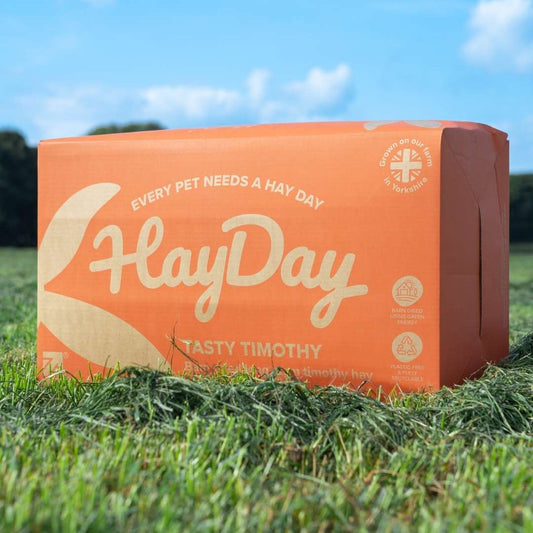
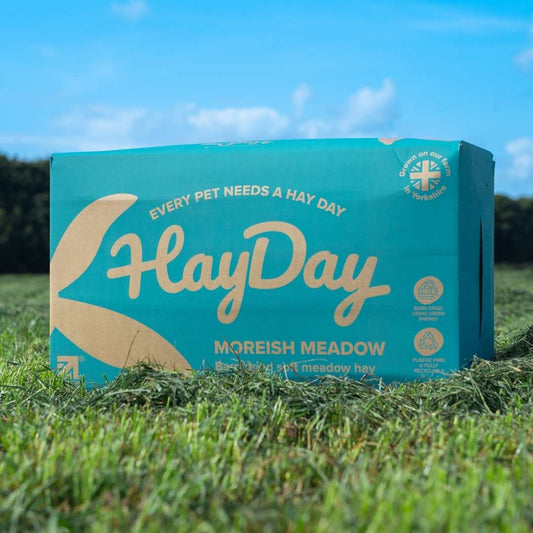
The vast majority of what your rabbit eats - around 80 to 95% - should be high-quality hay. Timothy hay and meadow hay are the two best everyday options, providing the essential fibre your rabbit needs for healthy digestion and dental function. At HayDay, our barn-dried hay is grown on a family farm in Yorkshire so we control the full process: from bale to finished product.
On top of that, a small daily portion of rabbit-specific pellets, following the feeding guidelines for your rabbit's size and life stage and a small handful of a variety of fresh leafy greens round out the main diet. Fresh water should always be available too.
Fruit, including grapes in all their varieties, sits firmly in the treat category - something you offer occasionally rather than regularly. Keeping that balance right is the key to a long, healthy life for your rabbit.
Which rabbits should avoid grapes altogether?
Some rabbits are better off without grapes entirely.
Baby rabbits under six months should not have any fruit until their digestive system is more established. Rabbits with a history of digestive issues, obesity or ongoing dental disease are generally better avoiding sugary treats such as grapes, as maintaining a high-fibre, hay-based diet is especially important for these rabbits.If your rabbit is on a special diet or recovering from illness, check with your vet before offering anything new.
Summary
Rabbits can eat grapes - green, red, black, purple, seedless and most other fresh varieties - but only in small amounts and as a rare treat. Wash and cut them beforehand, use seedless varieties where possible and avoid raisins or anything cooked or processed. Regardless of the variety, grapes should always be fed in very small amounts as an occasional treat. Baby rabbits under six months should not be given grapes at all.
Most importantly, never let treats like grapes replace the essentials. A rabbit that has unlimited access to fresh, high-quality hay, clean water and daily greens is a rabbit in great shape. Grapes are just a little bonus on top!
Frequently asked questions
Can rabbits eat raisins?
No. Raisins are dried grapes with a much higher sugar concentration and are not suitable for rabbits regardless of the original grape variety.
What should I do if my rabbit eats too many grapes?
Monitor your rabbit closely for signs of digestive upset such as soft stools, bloating or lethargy. Make sure they have access to plenty of fresh hay and water. If symptoms persist or worsen, contact your vet.
For more on keeping your rabbit's diet balanced, take a look at our guides on: