
Rabbits can eat blueberries, and they can make a convenient, bite-sized treat. Like all fruit, though, they’re naturally high in sugar, so they’re best offered occasionally rather than as part of your rabbit’s daily diet.
But occasional is the word that matters here. Two or three blueberries, twice a week. That’s more than enough for most rabbits alongside their healthy diet of bundles of fresh rabbit hay.
Can Rabbits Eat Frozen or Dried Blueberries?
-
Fresh - Yes - always the best option. Wash before serving.
-
Frozen - Yes, completely fine, but thaw them to room temperature first. Cold food straight from the freezer can cause stomach upset.
-
Dried - Not Ideal - the sugar content in dried blueberries is sky high compared to fresh, and there is absolutely no benefit over just offering the real thing. You'll find them marketed as rabbit treats surprisingly often, but don't be swayed.
Can Rabbits Eat Blueberry Leaves and Stems?
This one is worth approaching carefully. Guidance on blueberry leaves is mixed as some sources consider them safe in very small amounts, while others advise against them altogether.
Given the lack of clear consensus, our honest advice is to leave them out if in doubt or seek the advice of an exotic vet. The woody stems of the bush should be avoided entirely as they’re tough, low in nutritional value and not easily digested.
Why Can't Rabbits Eat Blueberries Every Day?
A rabbit's digestive system is nothing like ours. They require a high-fibre, low sugar diet - with specifically long-stem hay being an important component - and anything that disrupts that balance can cause real problems.
Small, inconsistent or loose poops are usually the first sign something's off with your rabbit and in more serious cases, too much sugar can dietary imbalance, including too much sugar and not enough fibre, can increase the risk of GI stasis
This isn't a reason to avoid blueberries altogether. It's just a reason to be sensible about how many you offer.
What Type of Hay Is Best for Rabbits?
Here at HayDay, producing premium hay for your pets is what we do best! Choosing the right hay for your rabbits is the single most important thing you can do for their health and happiness.
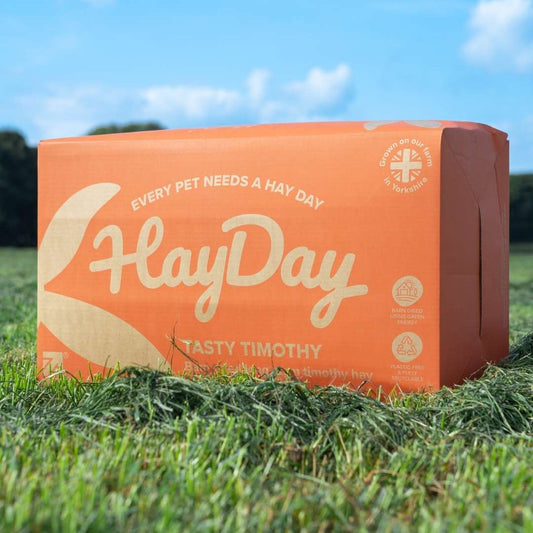
Timothy hay is where most adult rabbits should start as the long stems and high fibre content supports digestion and help wear down teeth that never stop growing (rabbits teeth are known as 'hypsodont').
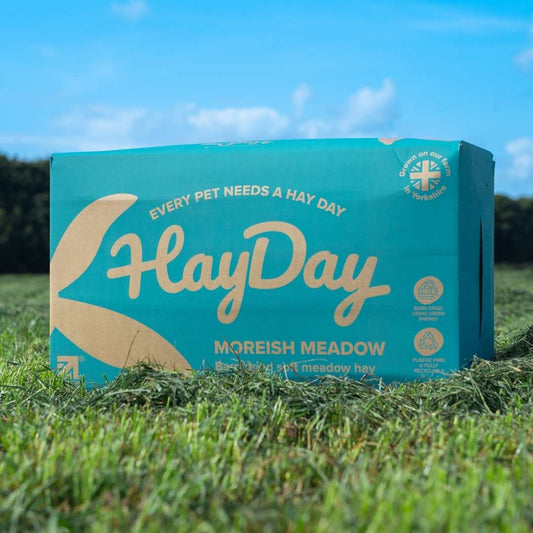
Meadow hay is also a suitable everyday feeding hay for adult rabbits. It offers more variety and is an extremely palatable option which often makes all the difference for rabbits who are reluctant to eat hay.
Oat hay is also a useful addition to the diet when fed alongside a timothy or meadow hay. It’s crunchy and nutritious, which will ultimately enrich your rabbit's diet!
Ryegrass hay is soft and highly palatable, which will entice the fussiest of nibblers. Ryegrass hay is best fed alongside a timothy or meadow hay as added enrichment.
Alfalfa hay can be great for adult pets as enrichment, offered occasionally in small amounts. Its higher protein and calcium content makes it ideal for young rabbits (up to 6 months), those nursing or pregnant and rabbits bouncing back from illness.
Offering a mix of suitable hays can help encourage intake and provide enrichment through variety.
When it comes to hay, your rabbits should be offered unlimited quantities, every day, without fail. If you’re unsure, use their body as a guide - as, at minimum, they should be offered the equivalent of their body size in hay per day.
What Other Fruits Can Rabbits Eat Instead of Blueberries?
If blueberries are just something you are considering for your rabbit, then take a look at some other alternative fruits they could also munch on
- Apples - Small pieces once a week, seeds and core removed
- Tomatoes - thoroughly cleaned and offerd in small quantities
- Mango - small piece, once a week; flesh only, skin and stone removed
- Papaya - small cube, once a week; some rabbit owners suggest it may support digestion, though the evidence is mixed — treat it as a fruit snack rather than a remedy
- Peach - small slice, once a week; flesh only, stone always removed
- Pear - 1–2 thin slices once or twice a week; leave the skin on, remove seeds and core
- Raspberries - a few raspberries twice a week; leaves are also safe and worth offering
What Vegetables Can Rabbits Eat Instead Of Blueberries?
Rather than reaching for more fruit, these are far better daily additions:
-
Rocket - peppery, low in sugar, and most rabbits enjoy it; a good daily green
-
Flat-leaf parsley - brilliant herb for daily feeding, high in vitamin C
-
Celery leaves - often overlooked but safe and well tolerated
-
Cos lettuce - similar to romaine, gentle on the stomach
-
Radish tops - the leafy green part of a radish is safe and a nice change
-
Mint - small amounts as a flavour addition; most rabbits love it
Aim to offer a variety of leafy greens each day rather than relying on just one type.
What Foods Are Toxic or Dangerous for Rabbits?
Keep all of the following unsafe food for rabbits away from rabbits, always:
-
Grapes and raisins - very high in sugar and best avoided
-
Avocado - highly toxic
-
Onions and garlic - toxic
-
Rhubarb - toxic
-
Any fruit seeds or pits (apple, pear, cherry, plum) - cyanide compounds
-
Iceberg lettuce - low nutrition, contains lactucarium
-
Processed human food (bread, crackers, cereal) - harmful to gut health
Get Premium Rabbit Hay Delivered to Your Door - Nationwide
Blueberries are a lovely treat, but ultimately, the hay rack is where your rabbit's health really starts and ends. At HayDay, we grow our hay from our farm in Yorkshire and deliver it to the doors of rabbit owners all across the UK.
Our premium rabbit hay range includes timothy hay, meadow hay, oat hay, ryegrass hay, and alfalfa hay which are all grown, harvested, and packed from the farm!
And if you'd rather never think about reordering again, our hay subscription service makes it simple. Choose your hay type, pick your delivery frequency, and we'll handle the rest - fresh, barn dried hay on your doorstep automatically, at 15% off the usual price of one-off orders. Cancel or adjust any time with no cancellation fee (or stress!), too.
Relevant Links
Frequently Asked Questions
What is GI stasis and why is it dangerous for rabbits?
GI stasis (Gastrointestinal Stasis) is a life-threatening condition where the rabbit's digestive system slows down or stops completely. This is often triggered by an insufficient fibre intake or an excess of carbohydrates/sugar. Signs include reduced faecal output, a bloated appearance, and loss of appetite. It requires immediate veterinary attention.
How should I introduce a new food, like a new fruit or vegetable, to my rabbit?
New foods should always be introduced gradually over a period of 7 to 14 days to prevent upsetting the rabbit’s sensitive digestive system. Start with a very small portion, monitor the rabbit's reaction for 24 hours, and slowly increase the amount only if it is well-tolerated.
Can rabbits eat carrots, and how often should they be given?
Rabbits can eat carrots, but they should only be offered as an occasional treat. Carrots are high in sugar, and too much can lead to obesity and digestive issues. It's recommended to offer only a few thin slices once or twice a week. The leafy carrot tops are a better option and can be fed more often.